



Building an organisation ready for growth
Share this post
Challenge
A fast-growing international company had an ambitious goal: to double its revenue by 2030. The company owed its success to entrepreneurship, speed, flexibility and a strong mindset of seizing opportunities. These were precisely the qualities the executive team wanted to preserve.
However, continued growth was also creating new demands. The organisation and its HR function had not kept pace with the growth of the business. Pressure on management and leadership was increasing, employees were looking for greater clarity and opportunities for development, and attracting enough talent was becoming an increasingly significant bottleneck.
The challenge we were asked to address was therefore much broader than HR alone: what does the growth strategy require of the organisation, its leadership and its workforce? And what choices do we need to make now to enable that growth?
Approach
We started not with HR, but with the business ambitions for 2030. Together with the executive team, we explored what the planned growth would require of the organisation, its workforce, leadership and HR. What kind of organisation would be best suited to the next phase of growth? What people and capabilities would be needed? And what would this mean for leadership and employment practices?
Using a specially developed workforce and capability model, we mapped out different growth scenarios. This enabled us to identify how the workforce would evolve towards 2030, where critical capabilities and potential skills shortages would emerge, and how AI and automation would affect work and staffing requirements.
At the same time, we worked with the executive team to shape the future organisational and leadership structure. How do you preserve entrepreneurship and speed while introducing the alignment, predictability and professionalism needed for further growth? We also defined how HR would need to evolve to actively support this transition. This brought strategy, organisational design, leadership, workforce and HR together in one integrated People Strategy 2030.
Impact
The project resulted in a concise, practical plan that directly links the growth strategy to choices about organisational design, leadership, workforce and HR. The executive team now has a clear vision of the future and an understanding of what needs to happen today: where new people and capabilities are needed, where development should take priority, and how AI is changing work and staffing requirements. This made human capital not simply a consequence of the growth strategy, but an integral part of it.
About the author

In practice, organisations often struggle to align their ambitions for employees, leadership and collaboration. The whitepaper Human Capital Ecosystem explores how to examine and strengthen both the visible and underlying dynamics within your organisation.
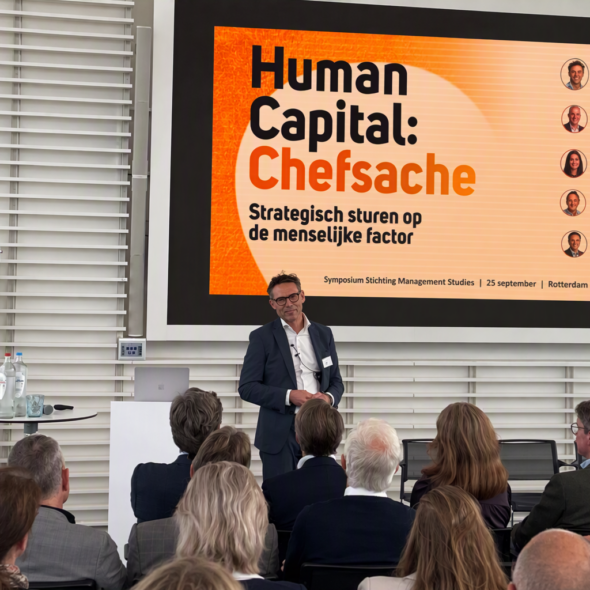
People are not resources, but assets to businesses. Human capital belongs on the boardroom agenda and is a matter for top leadership. Discover more in the book Human Capital: Chefsache!
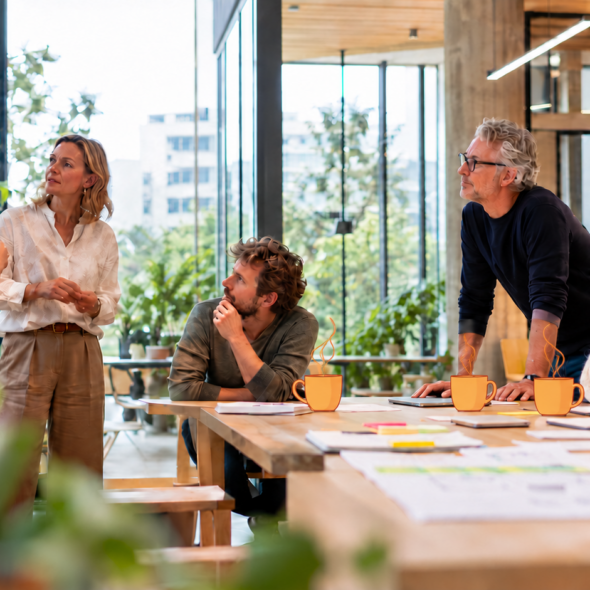
For an organisation, we not only developed an HR strategy with broad support, but also set the HR function in motion from the outset. By combining strategy development with organisational development, we fostered ownership, a shared direction and the ability to deliver.
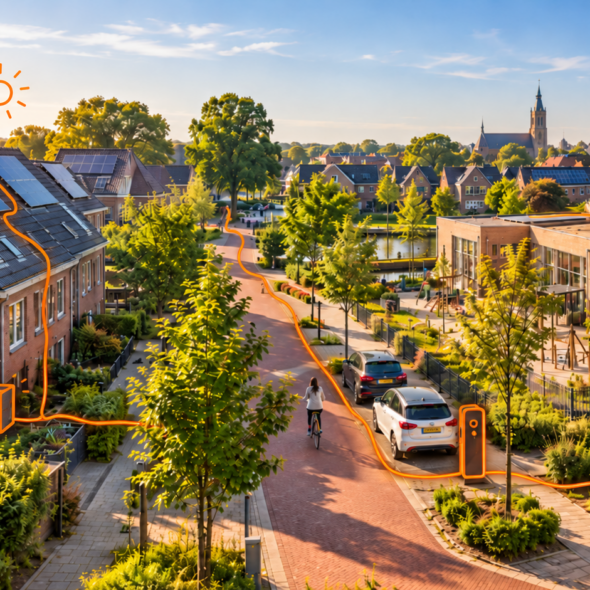
For one of the Netherlands' four largest municipalities (G4), we translated the projected workload involved in tackling electricity grid congestion into the staffing capacity and skills required. We also developed a scenario-based model to help the organisation plan ahead and make informed decisions.